The traditional exhibition at the shopping centre, open to the public from 17 to 28 February, marks the starting point of the Rally Barcelona-Sitges events and features a carefully curated selection of cars and motorcycles that take visitors back to the origins of modern mobility.
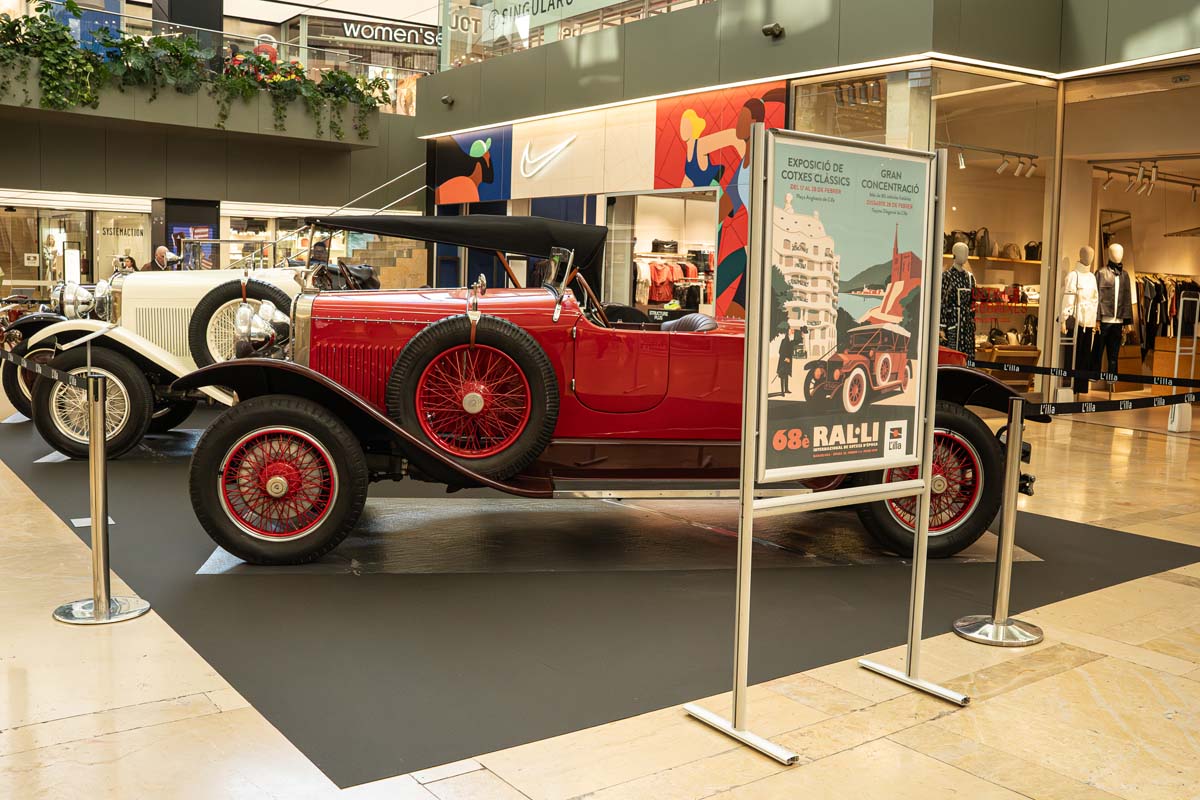
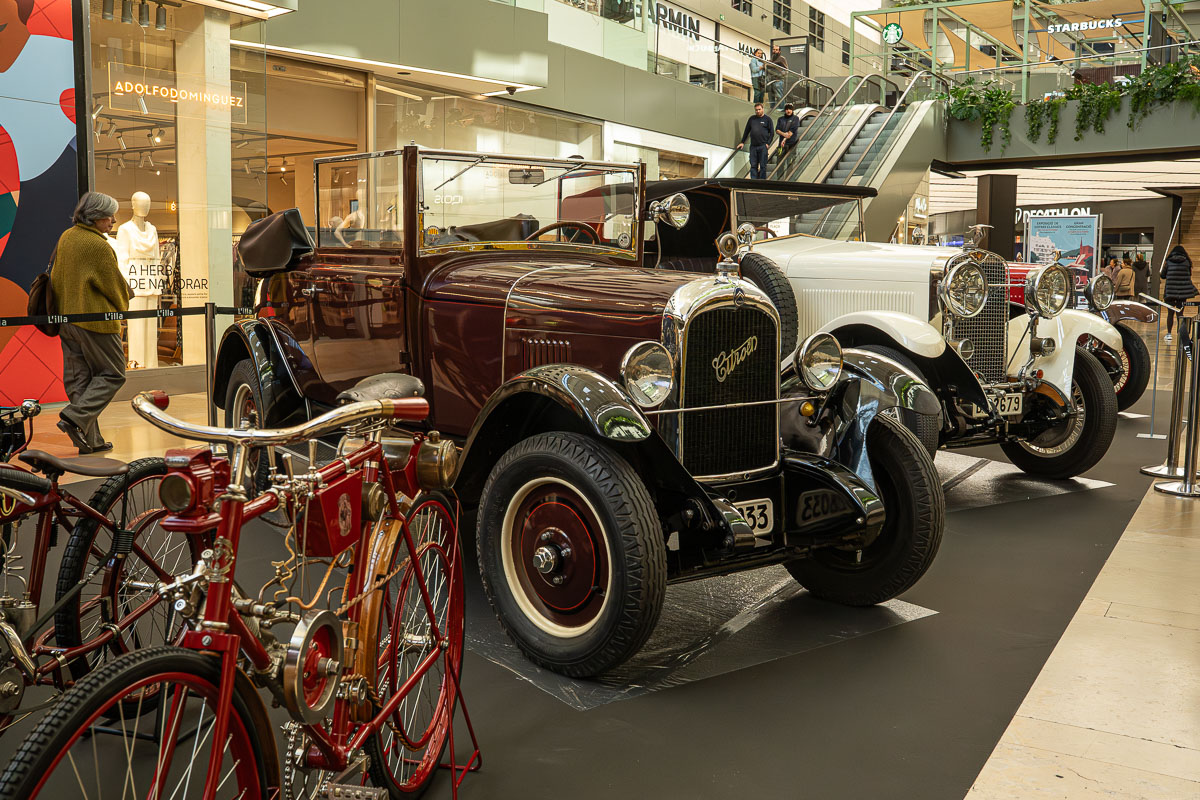
For almost two weeks, visitors will be able to admire at the shopping centre three automobiles owned by Jaume Vila and four motorcycles from the collection of the Museu de la Moto de Bassella. Once again, the exhibition becomes one of the most eagerly awaited preliminary events of the Rally, bringing century-old machines into an urban and accessible setting.
Automobiles (Owned by Jaume Vila)
Hispano-Suiza T48
This was a large-scale model that allowed for custom coachwork. It featured a servo-assisted brake system, exclusive at the time, designed to reduce driving effort. It was manufactured between 1924 and 1929, with an approximate production of 140 units.
Inline 4-cylinder engine
Bore and stroke: 85 x 110 mm
Displacement: 2,497 cc
Power: 55 HP at 2,800 rpm
Manufactured in Barcelona (La Sagrera) in 1924

Hispano-Suiza T49
The T49 was one of the brand’s most balanced models, a simplified version for the Spanish market of the large French H6, powered by a six-cylinder engine with detachable cylinder head, a configuration derived from the power units developed in France. Its technical concept made it a benchmark in its segment during the 1920s.
Bore and stroke: 85 x 110 mm
Displacement: 3,745 cc
Power: 75 HP at 2,500 rpm
Manufactured in Barcelona (La Sagrera) in 1924

Citroën B14 Cabriolet
The B14 helped consolidate mass production in Europe. It incorporated technical improvements over previous models, such as its all-steel construction, which eliminated wood from the structure. It was a commercial success that replaced the B12, offering greater comfort and reliability.
Inline 4-cylinder engine
Bore and stroke: 70 x 100 mm
Displacement: 1,539 cc
Power: 22 HP at 2,300 rpm
Manufactured in France in 1926
Motorcycles (Museu de la Moto de Bassella)
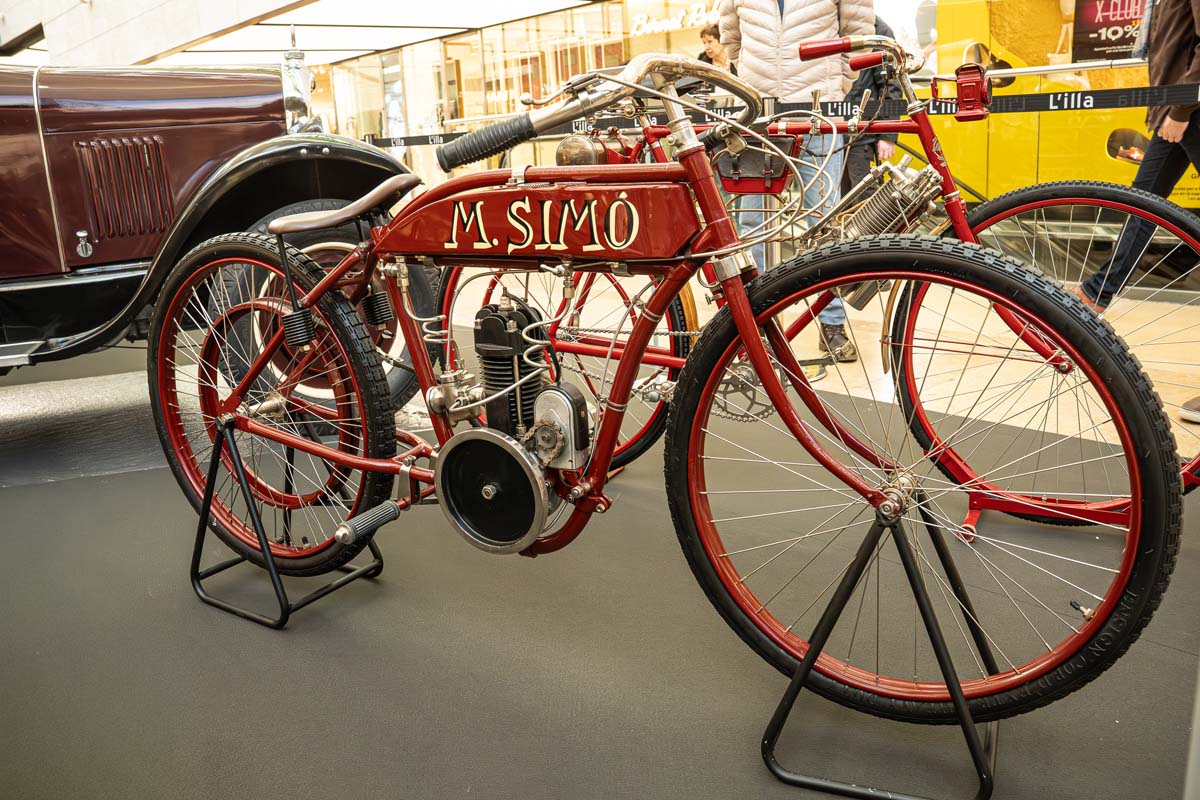
Simó (prototype)
Developed by a student from the Escola Industrial de Barcelona, who built a complete 148 cc engine. After receiving a grant from the Mancomunitat de Catalunya, he was able to complete the motorcycle and enter it in 1925 at the Terramar circuit. That experience laid the foundations for the subsequent range of Simó motorcycles.
Displacement: 148 cc
Manufactured in Barcelona in 1924
Royal Enfield 2T
Royal Enfield is considered the oldest motorcycle brand still in operation. Founded in the late 19th century, its first unit left Hunt End in 1901. It survived the disappearance of the British parent company in 1971 thanks to its establishment in India in the mid-1950s, where production continued and kept the brand alive to this day.
Displacement: 233 cc
Manufactured in England in 1922
Clement Auxiliary Engine
Driven by the versatile Gustavo-Adolfo Clément, entrepreneur, cyclist and automotive pioneer, this 1.75 HP auxiliary engine was created to be fitted to conventional bicycles. It stands as a testament to the early attempts at lightweight motorisation at the beginning of the 20th century and reflects the ingenuity of a time when mobility was still in full experimentation.
Displacement: 142 cc
Manufactured in France in 1902

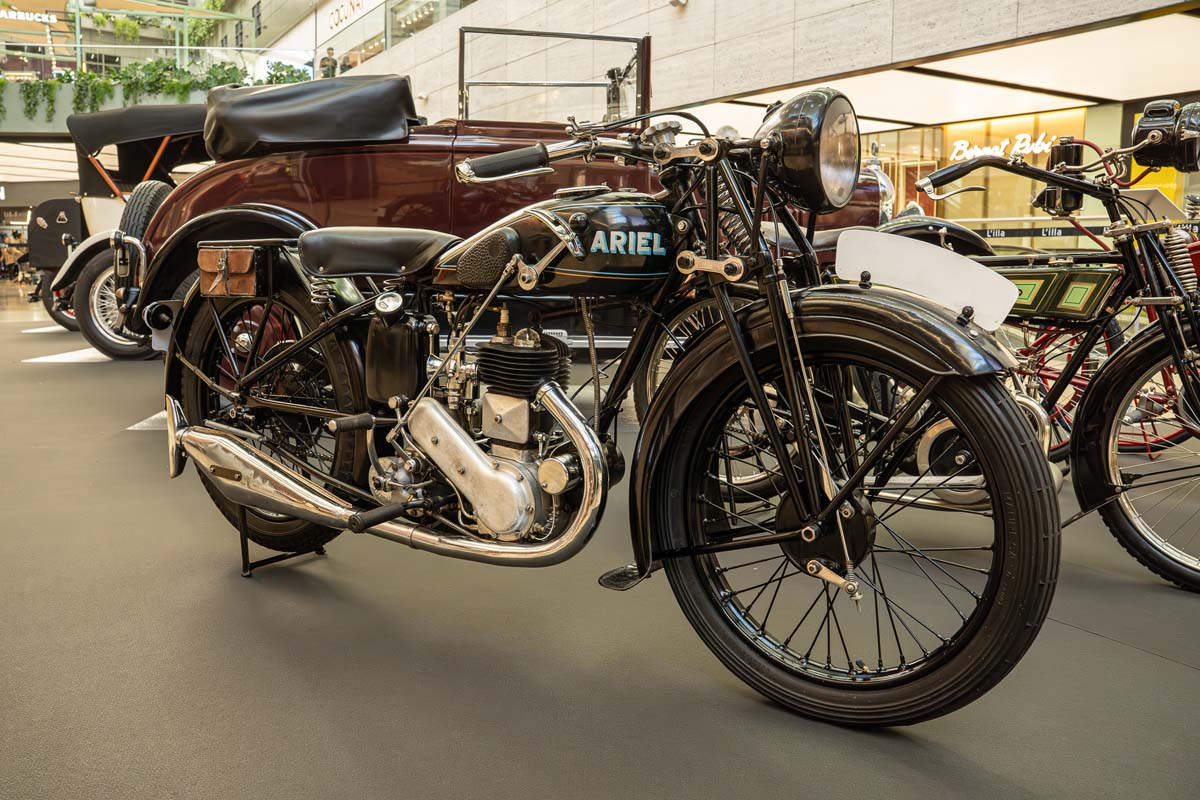
Ariel Colt
Presented at the Olympia Motor Cycle Show in London in 1930, the Ariel Colt was conceived as a practical and accessible motorcycle within the catalogue of the prestigious British firm. Equipped with a side-valve engine, its simplicity and positive commercial reception make it a representative example of the evolution of two-wheeled vehicles in the years prior to the widespread popularisation of motorised transport.
Displacement: 250 cc
Manufactured in England in 1930
With this exhibition, L’illa Diagonal once again becomes a showcase for the automotive and motorcycling heritage linked to the Rally Barcelona-Sitges. The display allows visitors to calmly admire vehicles similar to those that, just days later, will form part of the parade towards Sitges, keeping the history of mobility alive and reinforcing the bond between the Rally and the city.